Pages

The name of this blog, Rainbow Juice, is intentional.
The rainbow signifies unity from diversity. It is holistic. The arch suggests the idea of looking at the over-arching concepts: the big picture. To create a rainbow requires air, fire (the sun) and water (raindrops) and us to see it from the earth.
Juice suggests an extract; hence rainbow juice is extracting the elements from the rainbow, translating them and making them accessible to us. Juice also refreshes us and here it symbolises our nutritional quest for understanding, compassion and enlightenment.
Artificial Intelligence (AI) is not used in the creation of the items on this blog.

Tuesday, 28 February 2023

Wearing a Watch is a Waste of Time

Discarded watches
This blog starts with a personal story:

I have not worn a watch for over 12 years. Ironically (given the theme of this blog) I can name to the minute the event that prompted me to take that decision.

In February 2011 I was living in Christchurch, the largest city in the South Island of New Zealand. It had been my home for the previous 30 years. On the 22nd of that month, at 12.51 pm (NZT) a magnitude 6.3 earthquake hit Christchurch. Many buildings were destroyed, and homes wrecked. 185 people were killed – three of them friends of mine.

Following that event, knowing the precise time seemed irrelevant. All that mattered in the minutes and hours after the earthquake was to ensure that children, the elderly, and those with disabilities were safe, comforted and/or supported. All that mattered was that people cared. All that mattered was NOW.

There was no need to know the time in order to be someplace. Someplace was HERE. There was no need to make appointments. Appointments were HERE and NOW.

Somewhere in the midst of the chaos, debris, destruction, and the empathy, caring and thoughtfulness of people, I took off my watch and did not go looking for it again. At the time this was not a conscious decision.

Now it is! Now, I have decided that wearing a watch is a waste of time.

Watch Wearing

Why do we wear watches? When I was young, one of the signifiers of “growing up” was to acquire a watch. It was sign of maturity, or at least a recognition that I was to become responsible. (I now recognise this to be a flawed idea.)

Perhaps the unstated mythology around watch wearing is that we do so in order to know how many minutes or hours we have to be able to get to somewhere else. Wearing a watch may direct our attention towards the future.

Simply put, wearing a watch indicates that we are no longer present. Even though we may know the precise time, we are not present with that time. In his bestselling book The Power of Now, Eckart Tolle tells us that, “The more you are focused on time - past and present – the more you miss the Now, the most precious thing there is.”1

A common complaint I hear is that someone does not have enough time. Yet, it is our steadfast focus on being accurate in knowing the time that contributes to this grievance. In having ready access to the exact time on one’s wrist (or on the ubiquitous phone) we become limited by time.

Famously, Steve Jobs (co-founder of Apple Inc.) did not wear a watch. When asked one day by his daughter the reason for not doing so, Jobs replied, “I don’t want to be bound by time.”

Yet, sadly, we seem to mistakenly believe that wearing a watch, and having instant knowledge of the time, makes us more productive, and better prepared.

Being “bound by time” can lead to frustration, anxiety, and depression. For many in today’s world, these ills are chronic. Many people never get the chance to relax. There is an increasing pressure to be constantly and continuously available, and kept slave to timetables and time constraints.

Surely, such a state cannot be healthy. Yet, punctuality and conscientiousness are extolled in today’s world of increased productivity and the relentless desire for achievement and progress.

There does seem to be some evidence suggesting that wearing a watch makes the wearer more conscientious. A 2015 research paper by psychologists in the U.K. indicates that those who wear a watch may be up to 15% more conscientious that those who do not. Indeed, showing this was the objective of the research.2

Interestingly, however, buried amongst the statistics in this paper is another correspondence between wearing and not wearing a watch and openness to experience.

Those who did not wear a watch were more likely (by around 11%) to be open to experience than those who wore a watch.

These results beg the question: Do we prefer to be conscientious and on time, or do we prefer to experience the world and our role in it?

I would argue for the latter. It can be argued that one of the (many) reasons for the various ills of the world is that we are disconnected from experiencing fully that world.

By binding ourselves to time we would seem to be wasting our time.

Notes:

1. Tolle, Eckhart, The Power of Now, New World Library, Novato, California, 2004

2. David Ellis (Lancaster University) & Rob Jenkins (University of York), Watch wearing as a marker of conscientiousness, PeerJ 3:e1210; DOI 10.7717/peerj.1210, August 2015

Tuesday, 21 February 2023

Solitude - A Diet for the Soul

 ‘All of humanity’s problems stem from (our) inability to sit quietly in a room alone.’         
     – Blaise Pascal

Blaise Pascal was a 17th century French mathematician. However, it is his Penseés (Thoughts) for which he is primarily know today. In today’s mad, chaotic, and hypervigilant world there is a constant expectation that we will be instantaneously available for contact and communication. When and where do we find “time to sit quietly alone”?

Pascal suggested that all our problems stem from not being able to find solitude. Presumably he meant not just our personal problems, but also our social ones as well. Most likely, too, he was referring to our environmental problems. For in Penseés, one of his thoughts is: ‘Nature is an infinite sphere of which the centre is everywhere and the circumference nowhere.’

As a result of not finding “alone time,” and not being able to “sit quietly,” our soul becomes disregarded and unhealthy. How can our souls heal from the pains inflicted by the world?

Solitude is one way.

The very word – solitude – alludes to the possibility.

Have you ever noticed that the words SOUL DIET are an anagram for the word SOLITUDE? Solitude is Diet for the Soul: anagrammatically, figuratively, psychologically, and spiritually.

Before proceeding too far, it may be worth saying what solitude is not. Solitude is not; isolation, loneliness, exile, banishment, confinement, or alienation. All these forms of “aloneness” can engender negative emotional, psychological, and/or physical damage.

Solitude does not create such harm. In fact, solitude and the consequent attention to our soul is likely to help us heal from such harms.

And soul? What is our soul? Philosophers, theologians, poets, psychologists, and mystics have pondered this, and provided definitions, for millennia. The definition I like to use is that provided by the eco-psychologist, wilderness guide, and writer, Bill Plotkin. Plotkin grounds his definition of soul within the Earth community, thus not privileging soul as an uniquely human phenomenon. Plotkin’s definition is succinct. For him,

‘Soul…is a person or thing’s unique ecological niche in the Earth community…A thing’s eco-niche – its Soul – is what makes it what it is on the deepest, widest, most natural level of identity.’1

This is the understanding of Soul that resonates most clearly with me, and is the definition that I use throughout this blogpiece.

Note that Soul is; ecologically embedded, unique and personal, characterises identity, and fits with and alongside other ‘souls.’ Furthermore, soul is not synonymous with spirit. Spirit could be thought of as an all-encompassing, infinite, net, which transcends all. Soul then, could be thought of as the individual, unique, nodes of that net where the warp and weft of the net intersect. The net cannot exist without the nodes, and the nodes exist because they are part of the net. In this depiction, spirit is transcendent, soul is inscendent.2

When understood this way, it is possible to recognise how, and why, solitude is a powerful means by which our soul can be healed and nourished.

In solitude one is not distracted and is fully present, fully aware of themselves and their unique place in the world. Sitting quietly (in a room or elsewhere) one is able to fully and deeply reflect.

Miriam-Rose Ungunmerr is a Ngangikurungkurr woman from northern Australia. She has written an exquisite explanation of the process of sitting quietly in solitude and contemplation. In her language this is dadirri which she describes as,

‘…inner, deep listening and quiet, still awareness. Dadirri recognises the deep spring that is inside us. We call on it and it calls to us… It is something like what you call "contemplation".  When I experience dadirri, I am made whole again. I can sit on the riverbank or walk through the trees; even if someone close to me has passed away, I can find my peace in this silent awareness. There is no need of words. A big part of dadirri is listening. Through the years, we have listened to our stories. They are told and sung, over and over, as the seasons go by. Today we still gather around the campfires and together we hear the sacred stories.’3

Here, we notice too that Miriam-Rose locates dadirri and solitude within a world deeply connected with ancestral roots.

This is what solitude has to offer us. A deep connection with ourselves (our soul), with the present ecological world, and with a temporal identity.

There is a caveat to all this, however. What has so far been described sounds lovely, peaceful, and harmonious. It may not always be like this. Solitude, and deep self-contemplation, may take us into a darkness where we encounter our demons and our Shadow side (as Jung refers to it.) Indeed, for many Jungian psychologists and eco-psychologists (such as Bill Plotkin) this encounter with darkness and the depths is necessary for the true adult human to emerge.

Plotkin, for example, likens this to the stages of a butterfly. The caterpillar eventually enters the cocoon, where as a pupa it enters a darkened space, “dies” to the caterpillar stage, and metamorphosises into the adult butterfly.

Some of our best known “teachers” knew this experience well. Muhammed spent many nights alone in the Cave of Hira in prayer and contemplation. Jesus spent time alone in the desert where he faced his demons (in the form of Satan.) Buddha, similarly, was tempted by Mara (personification of demons) during his time of solitude and deep meditation.

Yes, during solitude we may be tempted, we may be frightened, we may even want to quit; yet the benefits of this soul diet are enormous. We finally get out of our own way, so that our ego-centric perspectives dissolve away, to be replaced by an all-encompassing eco-centric perception.

This has benefits for our soul and the souls of all other beings.

We find, via this solitude, and our emergent soul, that we become better able to connect with others, including other-than-humans. We become able to truly love the world. We become fully connected.

Yes, let us nourish ourselves with a Soul Diet, via Solitude.

Notes:

1. Plotkin, Bill, The Journey of Soul Initiation, New World Library, Novato, California, 2021

2. The term inscendence is borrowed from: Berry, Thomas, The Dream of the Earth, Counterpoint, Berkeley, 1988

3. The word, concept and spiritual practice that is dadirri is from the Ngan'gikurunggurr and Ngen'giwumirri languages of the Aboriginal peoples of the Daly River region (Northern Territory, Australia). 

Monday, 13 February 2023

Content Consumers Do Not Exist

 “In a consumer society, contentment is a radical proposition.”

Photo: Solveig Larsen

So asserts Robin Wall Kimmerer in her book Braiding Sweetgrass.1 Kimmerer is a member of the Citizen Potawatomi Nation, has a Ph.D. in plant ecology, and teaches environmental and forest biology.  In her book she braids together indigenous wisdom with scientific knowledge. The quote above is an obvious conclusion to make from her understanding of the energies and mysteries that pervade the inter-connections of all life on Earth.

When we contemplate this assertion the truth of it becomes apparent.

The words alone are enough to show us the distinction between consuming and being content.

The word consume comes to us via Latin. The Latin verb sumere means to take. A consumer is a taker. A taker takes from somewhere, or from someone else. A taker (consumer) takes something external to themselves, not something intrinsic.

Contentment also derives from Latin. Com(n) meaning with or together, and tenere meaning to hold. Hence, we could define contentment as the ability to hold together all the contents that make up being human. This means being able to hold, lightly, even seemingly contradictory emotions (e.g., sadness and happiness.) Viewed this way, contentment is more a state of mind than it is an emotion or feeling.

Contentment then, accepts things the way they are, but not in a care-less or resigned manner. Contentment has a conscious element and is both active and passive.

The passive aspect of contentment says: “I’m OK with this,” and “I am satisfied the way things are right now.” The active element of contentment asserts that “I have enough,” “I am replete,” and “I do not need to grasp at something, nor do I need to avert myself.”

When we understand contentment this way, then Kimmerer’s statement that ‘…contentment is a radical proposition’ becomes clear.

As a radical proposition, contentment is highly active. It shouts out, “Enough is enough!” and “this is enough!” Assertions such as these are anathema to an economic system wedded to the mantras of perpetual growth and consume-for-consumptions sake.

This is why there can be no such person as a content consumer. A consumer (taker) living under the rubric of perpetual growth can never have enough, can never be content. A consumer is never satisfied. A consumer, attuned to advertising that screams out “Buy more, buy happiness,” attempts to gratify an inner longing or yearning via something external. When that externality no longer satisfies (as it will,) the consumer must purchase more – ever more.

The Hungarian-Canadian physician and author Gabor Maté is informative when trying to understand how our individual psyches are shaped by the environment and culture we live in. Borrowing from Erich Fromm’s understanding of social (versus individual) character, Maté describes three ‘core social character traits common to most members of (our) culture.’ One of these traits he names Consumption Hunger and notes that, ‘Among the great achievements of mass-consumption culture has been to convince us that what we have been conditioned to fervently want is also what we need.’2 This describes addiction.

Contentment, however, radically rejects this consumption hunger. Contentment says “NO” to the corporations, institutions, and infrastructure that train us into believing that we want more and more stuff.

This blog concludes with a poem written by Kurt Vonnegut (author of the highly acclaimed novel Slaughterhouse Five) for his friend Joseph Heller (author of another highly acclaimed novel, Catch-22.) The poem recalls a party, given by a billionaire, at which Vonnegut and Heller were in attendance. It tells of a conversation the two famous authors had:

True story, Word of Honor:
Joseph Heller, an important and funny writer
now dead,
and I were at a party given by a billionaire
on Shelter Island.
I said, “Joe, how does it make you feel

to know that our host only yesterday
may have made more money
than your novel ‘Catch-22’
has earned in its entire history?”
And Joe said, “I’ve got something he can never have.”
And I said, “What on earth could that be, Joe?”
And Joe said, “The knowledge that I’ve got enough.”
Not bad! Rest in peace!”
3

Notes:

1. Kimmerer, Robin Wall, Braiding Sweetgrass, Penguin Random House, UK, 2020.

2. Maté, Gabor, with Maté, Daniel, The Myth of Normal: Trauma, Illness & Healing in a Toxic Culture, Vermilion, London, 2022.

3. Vonnegut, Kurt, published as an obituary poem for Joe Heller in The New Yorker, May 2005.

Tuesday, 7 February 2023

Being Language

What if we encountered the trees, the birds, the rocks, the flowers, the ocean, the mountains, as beings instead of things? What if I was to say, of a tree, ‘she is waving her branches’ instead of ‘it is waving its branches’? In doing so, I am not meaning to be anthropomorphic by attributing human-ness to the tree. I am simply acknowledging her as a being that lives and breathes as much as do I.

(Indeed, it is telling that the only way in the English language to recognise a tree, or a rock, or a mountain, as a being is to attach human pronouns to the tree, rock, or mountain. More on this below.)

Would such an acknowledgement and encounter shift the way in which we perceive the world and our place in it? I suspect it would.

Our use of language both reflects and creates our understanding of the world.

In her book Braiding Sweetgrass, Robin Wall Kimmerer reflects upon this.1 Kimmerer is a member of the Potawatomi Nation and has a PhD in plant ecology. She writes of learning her native language and also the language of science. Although recognising the usefulness of scientific language, when compared with her native language she discovers how much is missing in in the language of science. She writes that one of the first words she learnt in Potawatomi is the word Puhpowee. She translates this as, ‘the force which causes mushrooms to push up from the earth overnight.’2 She was stunned. Such words do not exist in scientific language. This word spoke of ‘unseen energies that animate everything’ to her.

To Kimmerer and her Nation, the world is not an inanimate place where mushrooms are referred to by it. The Potawatomi language recognises the beingness within the world. She tells us that only 30% of English words are verbs, whereas in Potawatomi 70% of the words are verbs. So it is that in her native language, where English would use a noun, Potawatomi speaks of ‘to be a hill’ or ‘to be a river.’

Thus, the its of English become beings in Potawatomi.

It is little wonder that Kimmerer and her Nation look upon the world in a completely different way than do those of us raised in a western-styled culture.

Few within western-styled cultures share Kimmerer’s understanding of the world. One who did so was the eco-theologian Thomas Berry. In his classic The Dream of the Earth Berry writes that ‘The universe is a communion and a community. We ourselves are that communion become conscious of itself.’3

Expanding upon Berry’s metaphor; when we enter into communion with the universe, we surely can no longer entertain a consumer relationship. Our relationship with the world must be one of reciprocity, rather than simply take, take, take.

Are we able to imbue our language, including our scientific language, with such an understanding? Can we look at, and speak of, the world as a community of beings rather than an assembly of things?  

We rarely consider our language when we think of social change or environmental protection. Yet, our language shapes how we think of that change and protection.

Changing our language, or at least some of the words we speak, could be one of the simplest steps we take.

Notes:

1. Kimmerer, Robin Wall, Braiding Sweetgrass, Penguin Random House, U.K., 2013.

2. Ibid. 5 pages later (on p 54) Kimmerer tells us cheekily that ‘Puhpowee is used not only for mushrooms, but for certain other shafts that rise mysteriously in the night.’

3. Berry, Thomas. The Dream of the Earth, Counterpoint, Berkeley, USA, 1988

Wednesday, 1 February 2023

Unearthing Democracy

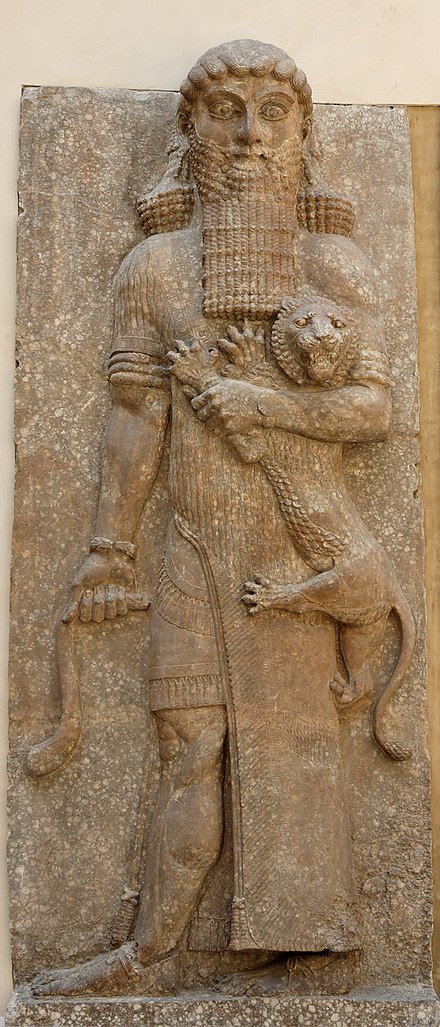
Gilgamesh
Representative/electoral democracy is failing us. You do not need to look very far or deeply to recognise the, perhaps stark, veracity of that statement. Our elected representatives have failed to adequately address climate chaos, let alone even begin to understand the wider implications of environmental collapse and Mass Extinction.

The political divide is widening and becoming more and more polarised and entrenched within confined political party affiliation and identity. This polarisation has spilled over into the public and social arena. The past three years has shown that. Although most people adopted an ambivalent1 attitude towards covid and responses to the pandemic, a large percentage of the population fell, fervently, into one of two mutually antagonistic camps.

Even though many people recognise this failure, very few seem willing to challenge the underlying assumption that representative democracy (including the electoral system) is the gold standard for government. That unhelpful decisions are being made in our parliaments can be addressed, many suggest, by changing the politicians currently in power. And the means of doing that is via the voting system.

This basic assumption, it is claimed, originated in Athens some 2,500 years ago.

This assumption is not true, at least not entirely. The Athenians did not trust voting as a fair means of selecting their decision-makers. For that they used a lottery system. Today, this is known as sortition. Sortition has been covered in this blogsite a number of times previously: see here, here, and here for example.

Pre Athens

Long before the Athenians began experimenting with sortition and democracy a number of other societies were testing out far more democratic processes than we use today. Evidence is mounting for the existence of citizen councils (where participation by lot is the basis of membership) and popular assemblies (open to any citizen to attend) as forms of decision-making many millennia ago.2  

Archaeological digs in modern day Ukraine and Moldova since the 1970s have unearthed some spectacular finds known as ‘mega-sites.’ Not only have these sites thrown into doubt theories on how cities emerged, but also our assumptions on leadership, authority, and kingship some 5,000 to 6,000 years ago.3

Many of these sites have now been explored and documented, with the largest – Taljanky – hosting more than 1,000 houses and covering an area of 300 hectares. Many of these mega-sites are constructed in concentric rings with a huge open area in the middle.

Significantly, Graeber and Wengrow note that, ‘No evidence was unearthed of centralized government or administration – or indeed, any form of ruling class.’ As to the use of the large open central area, Graeber and Wengrow can offer no definitive answer, suggesting only that its use ‘ranged from popular assemblies to ceremonies or the seasonal penning of animals – or possibly all three.’

Some 3,000 km south-east of Moldova and Ukraine is the area known as Mesopotamia (Land between two rivers) where archaeologists date cities to more than 6,000 years old. Unlike those in Ukraine and Moldova though, these cities have been known for centuries, many of them mentioned in the Bible. Many of these cities have been excavated since the 19th century and the popular myth that this was The Land of Kings has persisted even up until the present day. However, that myth shrouds the area and covers up what was a diverse arrangement of leadership and governing styles.

Research since the 1940s and more recently suggests that popular councils and citizen assemblies were common features of Mesopotamian cities with Graeber and Wengrow stating that ‘it is almost impossible to find a city anywhere in the ancient Near East that did not have some equivalent to a popular assembly – or often several assemblies (for instance, different ones representing the interests of “the young” and “the old”).

Indeed, perhaps the oldest known written story or poem – Gilgamesh – refers to an “Assembly of city elders,” and another as the “Assembly of the city’s young men.”4 In the epic poem, written somewhere between 2,200 and 2,600 years ago, the tale is told of Gilgamesh, the King of Uruk, and a dilemma he is facing over whether to submit to King Akka of Kish or not.

The poem tells us that the “Assembly of elders” recommend he submit to King Akka. The “Assembly of young men” however, recommend resistance. Eventually Gilgamesh heeds the advice of the young men and Uruk is victorious over Kish.

The crucial thing to note in these pre-Athenian examples is that citizen assemblies and popular councils were being used and tested, at least 4,000 to 6,000 years ago. Athenian democracy did not emerge until some 1,500 years later.

Democracy Covered Over

So, what happened to these more direct, highly participatory, democratic forms?

They got covered over, and buried under earth mounds of voting, electoral systems, career politicians, political parties, and special interest lobby groups.

The archaeologists are doing it. It is time we did too.

It is time for us to dig up and unearth the democratic examples of years gone by. It worked for Gilgamesh and the citizens of Uruk.

An unearthed democracy could be: direct, truly representative, fair, and open to all to participate in.

Notes:

1. I am using the word ambivalent here in its true, etymological, sense. Deriving from the Latin ambi meaning “on both sides” and Valentia meaning “strength.” This gives an idea of giving strength to both sides. Thus, instead of it having a rather insipid meaning of not caring, or indecisiveness, in this context I am suggesting an ability to hold (or at least be accepting of) both sides.

2. Just exactly where the division between citizen and non-citizen was drawn is unclear. There does seem to be some evidence suggesting that there was little, if any, distinction between men and women however, as there was in later Athens.

3. Graeber, David, & Wengrow, David, The Dawn of Everything, Penguin Books, 2022.

4. Johandi, Andreas, Public Speaking in Ancient Mesopotamia: Speeches Before Earthly and Divine Battles, University of Tartu, May 2020. In this paper Johandi also notes that the Gilgamesh poem refers to the Gods having their own Divine Assembly.

Tuesday, 24 January 2023

Fuel Consumption Is A Problem

In our world today climate chaos is recognised as a huge issue, and our consumption of fuel is acknowledged as a major contributor to that chaos. We must do something about it.

However, we are not doing the right (best) thing.

We are trying to do something by focusing upon the noun in the phrase – fuel. Sadly, most of the actors in the conversations around climate chaos are doing this. Those in the business of providing fuel (whether it be electricity, vehicle fuel, fuel for cooking, or fuel for manufacturing purposes) are continually seeking ways to make fuel production cheaper (to increase profits.) Those who are consuming fuel are also searching out ways to bring their fuel costs down. There are many too who, concerned about the emission of CO2 from fossil fuels, are keen to promote alternative fuel sources.

However, doing something about the fuel (whether making it more efficient, substituting with alternatives, or offsetting the emissions) will change nothing. Indeed, it will keep sending us down the same rabbit hole.

Making fuel more efficient to use is a blind alleyway. Mostly, what happens when something is made more efficient, is that people use it more and/or a greater number of people use it. This concept even has a name – the Jevons Paradox (a.k.a. the Rebound Effect.)1

When Henry Ford introduced his Model T Ford in 1908 a driver was able to travel 100 km on about 11 litres of petrol. Today’s driver will travel 100 km using about 8 - 12 litres, hardly a significant gain it would seem – on first sight. Part of the reason for this is that the efficiency gain has been taken up by increased vehicle weight. The heaviest Model T Ford was about 750 kg, today the average private vehicle is about 1,800 kg – 2.4 times heavier. Thus, in the case of private vehicles, greater efficiency has meant bigger and heavier cars, not a reduction in use of fuel. If Jevons were alive today, I’m sure he would be smugly thinking to himself – “I knew it!”

What about alternative fuels? There is a lot of hope placed in the possibilities of; “renewables” (especially wind and solar) for electricity production, lithium-ion batteries for cars and light trucks, hydrogen-fuel cells for air transport, and possibly some other breakthrough-to-come (e.g. sodium-ion batteries.)

Yet, each of these are fraught with difficulties of; scalability, time-lag (from research and development to production,) depleting access to minerals,2 limits on efficiency,3 and poor EROEI (Energy Return On Energy Invested.)4

Furthermore, Simon Michaux (one of the world’s foremost energy and minerals analysts) has estimated the amount of extra electrical power required to phase out use of fossil fuels is almost 38,000 TWh (Terawatt hours.) This figure is approximately 2 ¼ times as much electricity as coal, oil, and gas presently provide, and an increase of 318% greater capacity in all “renewable” electricity generation (including hydroelectricity and nuclear power) than is available today.5

Significantly too, with the rapid growth of the twin favourites of “renewables” (wind and solar) this century, all of that growth has simply added to the supply of electricity – none of it has substituted for fossil fuels at all. William Jevons has been proved correct again.

Remember too, that electrical power generation from wind and solar make up only ¼ of the global “renewable” mix – the rest is primarily nuclear and hydropower. The numbers just are not stacking up when it comes to focussing on fuel as the problem.

The most serious concern however, is that each of these alternatives (like fossil fuels themselves) damage local eco-systems and are frequently disruptive of local (often indigenous) communities.

Just two weeks ago, Bala Chambers, an Anglo-Brazilian freelance reporter and researcher reported on the opposition of a number of Argentinian environmental groups to the mining of copper, gold, molybdenum, and lithium in the country.6

One of these groups is the Assembly of Ancasti for Life based within the Lithium Triangle. One of its members, Luciana Fernández (an anthropologist, teacher, and mother of four children) branded lithium exploration as ‘another green capitalist discourse to continue generating new products that get placed in the marketplace – all in the developed world.’ (my emphasis.)

Fernández and others, such as Freddy Carbonel, from the northern, mountainous area of Argentina (who has been an environmental advocate since the 1980s) are opposed to the destruction of eco-systems, including waterways, animal habitats, and local communities  - all to fuel rich consumer-industrial societies.

Such opposition and protest is not restricted to Argentina and the Lithium Triangle (including Chile and Bolivia.) Similar groups and opposition exists in Tibet, the USA (Thacker Pass,) and Portugal.7

Solving the problem of fuel consumption by focussing exclusively on the noun (fuel) is not the answer.

The Verb ‘to Consume’

Why is it that very few people and groups are unwilling to seriously question the verb in the sentence: “Humans consume fuel”?

Yet, our consumption levels are where the problem really stems from. Surely, that should be where we look for solutions.

Humans have, in parallel with all living creatures, had to consume. We have had to consume resources to feed, clothe, and shelter ourselves. For thousands of generations we did so within the limits of the natural world. However, over the past couple of centuries, and increasingly so since the end of WW2 we have consumed the planet’s resources at an alarming rate. William Catton (populariser of the term Overshoot)8 calls this period of human history the Age of Exuberance. We have exuberantly raided our planet’s storehouses and left waste and rubbish in our wake.

The eco-theologian and cultural historian Thomas Berry, suggests that this exuberance is an understandable outgrowth of our disconnection from our natural, and sacred, association with Nature – our home. Consumerism, he states, ‘…has found its ultimate expression in our own times, when the ideal is to take the natural resources from the earth and transform them by industrial processes for consumption by a society that lives on ever-heightened rates of consumption.’9

Catton, Berry, and others, clearly understood that the problem lies in the verb – to consume. How many others do?

Do we see any sign of a global movement questioning consumerism and seeking to find the solutions to overshoot?

Yes! Signs exist in the De-Growth movement, the Deep Ecology movement, and with eco-psychologists. But these movements are small in comparison to the movements advocating for, and promoting, alternative fuels.

Very few seem willing to examine what it would mean to consume less, or how we might make the transition towards less consumption. Why?

Perhaps because the implications would disrupt our ‘ego-logical desires for the 6 “Cs” of comfort, convenience, consumption, certainty, control, and coherence.’10 We might need to question who we are, and what our place in this world is, or should be? Is that too hard?

In the meantime, the majority of our thinking, planning, finances, and creativity is weighted towards seeking new, exciting (even sexy), alternative sources of fuel.  

We must shift our focus from the noun (fuel) to the verb (to consume.) The sooner we do so the better.

Notes:

1. Named after the English economist William Jevons, who first noticed the effect in the use of coal in 1865.

2. See for example Simon P Michaux, The Mining of Minerals and the Limits to Growth, Geological Survey of Finland, Report Number 16/2021, March 2021.

3. See for example: Mark P Mills, The New Energy Economy: An Exercise in Magical Thinking, Massachusetts Institute, March 2019.

4. See for example: Megan Seibert and William Rees, Through the Eye of a Needle: An Eco-Heterodox Perspective on the Renewable Energy Transition, Energies journal, 2021. https://doi.org/10.3390/en14154508

5. Michaux, Simon P., Assessment of the Extra Capacity Required of Alternative Energy Electrical Power Systems to Completely Replace Fossil Fuels, Geological Survey of Finland, Report 42/2021, 20 August 2021.

6. Bala Chambers, Environmental defenders join forces across Argentina to stop mining boom, Waging Nonviolence newsletter, 11 January 2023.

7. Oliver Balch, The curse of ‘white oil,’ Electric Vehicles dirty secret, The Guardian, 8 December 2020.

8. Catton Jr., William R., Overshoot: The Ecological Basis of Revolutionary Change, University of Illinois Press, Urbana and Chicago, 1982.

9. Berry, Thomas, The Dream Of The Earth, Counterpoint, Berkeley, California, 1988.

10. de Oliveira, Vanessa Machado, Hospicing Modernity, North Atlantic Books, Berkeley, California, 2021.

Tuesday, 17 January 2023

Re. Reweaving The Web Of Life (Book Review)

Just over forty years ago Pam McAllister edited one of the most important books exploring the interface between feminism and nonviolence. With more than 50 contributors writing articles, letters, poems, and songs, Reweaving The Web Of Life1 proved just how incisive and diverse could be the critique of patriarchy. It also helped to unlock the door into a new society beyond the confines and constraints of inequality and violence.

Pam McAllister and the other women (although two men did co-author one article, More Power Than We Want) contributing were not only pointing out the failings of patriarchy and the existing world-order, they were looking forward, expectantly, to a different future. Importantly, they recognised that the future and the present were intricately linked (one of the many wefts and warps woven into the book) together. As McAllister put it in her Introduction:

‘A new world, the world I long for, cannot be built with the tools, psychology, belief systems of the old. It will be born of the changes encoded in the details of our lives as we are living them now. The fabric of the new society will be made of nothing more or less than the threads woven in today’s interactions.’

The title of the book comes from the title of Catherine Reid’s essay – Reweaving the Web of Life ­– in which she tells the story of a group of women calling themselves The Spinners. The Spinners were allied with the “Vermont Yankee Decommissioning Alliance” opposed to the construction and then continuance of a 620 MWe nuclear reactor on the Connecticut River.

Reid’s essay tells how The Spinners used thousands of yards of coloured yarn, threads, and strings which they secured to various trees, and then began spinning and weaving before the police could respond. Significantly, the nonviolent action of The Spinners took place just three days after the beginning of the accident at Three Mile Island nuclear reactor.2

The story of The Spinners is one of dozens of examples of the use of nonviolence by women cited in the book.

McAllister writes of how a Tarot card reading helped her with the strength she needed to write the book. One of the cards she took was labelled Strength and showed a woman stroking a lion. The convergence of feminism with nonviolence and strength is clear in the symbolism.

It is no coincidence that McAllister wove together the threads of feminism with those of nonviolence. In common with many feminists at the time, McAllister raged at ‘patriarchy’s brutal destructiveness’ and refused to adopt it’s (violent) ways. Furthermore, she asserted that she ‘refused to give in to despair or hate or to let men off the hook by making them the “other”.’

In that statement McAllister alluded to one of patriarchy’s underpinnings – that of separation and disconnection. McAllister, and the other contributors were having nothing of that sort of divisive thinking. For many within progressive movements of the time this (idea of non-separation) was quite a radical thought.

All but one of the contributors were US based, which was a deliberate decision on McAllister’s part. She intended following up with a book featuring contributors from other parts of the world. That idea morphed into two books presenting stories of women using nonviolence from all over the world: - You Can’t Kill The Spirit (1988) and This River of Courage (1991).

Reweaving the Web of Life is a landmark book, bringing together as it does, many contributors writing about the theory behind feminism and nonviolence, as well as telling stories of actual experience.

For anyone wishing to delve deeper into ways to re-weave the web of life, then this book is a must-read.

Notes:

1. Pam McAllister (ed.), Reweaving The Wed Of Life: Feminism and Nonviolence, New Society Publishers, Philadelphia, 1982

2. The Three Mile Island accident was a partial meltdown of one of the reactors at Three Mile Island nuclear power plant in Pennsylvania in March 1979. At the time, the International Atomic Energy Agency (IAEA) rated the accident at Level 5 on its 7-level International Nuclear Event Scale. It remains the most significant nuclear accident in US commercial nuclear power plant history.