Pages

The name of this blog, Rainbow Juice, is intentional.
The rainbow signifies unity from diversity. It is holistic. The arch suggests the idea of looking at the over-arching concepts: the big picture. To create a rainbow requires air, fire (the sun) and water (raindrops) and us to see it from the earth.
Juice suggests an extract; hence rainbow juice is extracting the elements from the rainbow, translating them and making them accessible to us. Juice also refreshes us and here it symbolises our nutritional quest for understanding, compassion and enlightenment.
Artificial Intelligence (AI) is not used in the creation of the items on this blog.
Showing posts with label Voting. Show all posts

Thursday, 1 May 2025

Poets and Politicians

As I write this it has been two days since the Canadian election and in two days time the Australians go to the polls.

We have seemingly had elections and politicians for aeons. We have had definitions for politician ever since Samuel Johnson’s first edition of Dictionary of the English Language, published in 1755. In that first edition the second definition Johnson gave for politician was ‘A man of artifice; one of deep contrivance.’ Many would argue that the definition still adheres.

With antecedents in the Roman Republic and in England in the 13th century, it is only since the 17th century that electoral democracy began to become the standard form of government throughout the western world. Just two and a half centuries.

During these last two and a half centuries where has electoral (aka representative) democracy (and its attendant politicians) got us? Much of the research into politics has shown that political representation greatly favours affluent sectors of society to the detriment of the population as a whole. Hardly representative. When one looks at the make up of politicians who do become elected, in most cases world-wide they are from the wealthy elite. Very few are those we would meet whilst out walking the dog or pushing a baby in a pram. (Although we will find them queuing up to pat the dog or kiss the baby come election time.)

Furthermore, with politicians at the helm over the past two and a half centuries the world has become a lot messier. Environmentally it is in a mess. Socially and culturally, it is in a mess. Individually too, we are in a mess. Politicians do not appear to have the willingness to tackle much of this, and some even exacerbate the mess.

Yet, we continue to vote for politicians, we continue to vote for a flawed system. Whitmore, we continue to listen to them. We continue to allow politicians to speak on our behalf, notwithstanding that most do nothing of the sort.

So, who could we listen to instead?

The avant-garde filmmaker and poet Jonas Merkas once quipped that, ‘In the very end civilisations perish because they listen to their politicians and not their poets.’ Maybe he is correct.

Another artist, the science fiction author Ursula K. La Guin enlarged upon Merkas’ remark. The author of the very popular Earthsea fantasy series emphatically suggested that;

‘I think hard times are coming, when we will be wanting the voices of writers who can see alternatives to how we live now, and can see through our fear-stricken society and its obsessive technologies, to other ways of being. And even imagine some real grounds for hope. We will need writers who can remember freedom: poets, visionaries—the realists of a larger reality. Right now, I think we need writers who know the difference between production of a market commodity and the practice of an art.’

Merkas and La Guin could be onto something.

It may be as simple as William Blake reminding us of our connection to the cosmos: ‘To see a world in a grain of sand/ And heaven in a wild flower/ Hold infinity in the palm of your hand/ And eternity in an hour.’

Perhaps it is the Bard’s love sonnet that begins with, ‘Shall I compare thee to a summer’s day?/ Thou art more lovely and more temperate;/ Rough winds do shake the darling buds of May,/ And summers lease hath all too short a date.’

Or Mary Oliver suggesting advising a quietude of mind: ‘Every day I see or I hear/ something that more or less/ kills me with delight.’

These and dozens of other poems and poets have us asking the simple question, as Mary Oliver does; ‘There’s only one question/ how to love this world.’

I doubt that this is a question politicians ask very often.

I hear them answer it very rarely. If at all.

I think I’ll go find a book of poetry to read while the Australian elections are on.

Tuesday, 24 September 2024

Voting: Same As It Ever Was

Where I live has recently had elections for its city council. People have voted for one mayor and eight Councillors. The people have spoken. Or have they?

These nine members of the Council will be making decisions for the almost 80,000 people that live within the city’s boundaries.

They will be doing that in their first week.

But, here’s the rub. There will be 156 weeks of decision making before the next election. It will be the same nine people in the first week as it will be in the final week. The same nine!

Yet, we call this representative democracy.

It is one of the biggest falsehoods we tell ourselves. It defies reason to suggest that the word “representative” can be applied to a system whereby 0.01% of the people in an area make decisions for the other 99.99%, every week for 156 weeks (3 years) on end.

The pattern gets repeated in the more than 500 districts in this country. The pattern is repeated in other so-called representative democracy countries throughout the world.

But, here’s a further rub. At the end of that 3-year term (or whatever length it is) many of those nine will put themselves up for election again. And most will get re-elected. Representation from the 99.99% is highly unlikely.

If the word democratic comes from the Greek word meaning common people, and the word representative derives from the Latin word for to show, exhibit, set in view, then our modern concept of representative democracy is a cover-up of its essential meaning – to set the common people in view. And what is a cover-up? A sham.

Let us be honest. Let us name it for what it truly is. Representative democracy is a sham.

So, what then?

Winston Churchill is reputed to have said that ‘democracy is the worst form of government, except for all the others that have been tried.’ Perhaps Churchill had not studied in depth the democracy of ancient Athens.

Ancient Athens used a system that selected their decision-makers via sortition – essentially by lot. Thus, the chances of anyone (whether from the 0.01% of the population or from the 99.99%) had an equal chance of being selected. Plus, having been selected once did not give that person a greater chance of being selected next time.

I will not cover sortition any further here. I have written extensively about sortition in this blog. In the topics section on the right side of this blog can be found the entry “Sortition” Clicking on that will show numerous items.

‘But, but,’ I can hear the objections. “But, we need the best to represent us. Voting is the best way to get the best representatives.”

We must ask: what is best? Who are the best? The best decision-makers? If getting the best decision-makers is our objective then surely, voting is not going to do that. Unless. Unless the best decision-makers are the voters. Citizens must be the best decision-makers if it is they who we trust to make the best decision (via voting) as to who are to be the representatives. So, why not simply trust citizens right from the start and do away with voting altogether.

Sortition is simple and a lot more representative.

Tuesday, 21 March 2023

I Can't Vote and I'm Okay

Next weekend in Australia (where I live) citizens go to the polls in their State elections.

As a New Zealander I am ineligible to obtain Australian citizenship, even though I have lived here for the past eleven years. Not having Australian citizenship means that I cannot vote in these coming elections.

And, I am quite okay with that. In fact, I could almost claim to be glad of that.

That seems a strange thing to say, perhaps even paradoxical, unreasonable, or senseless. It may look that way, especially from the perspective of those who claim that ‘voting is our democratic right.’

From my perspective, however, things look quite different.

Voting is not democratic.

That is perhaps an even stranger thing to say, even subversive, or disloyal.

Let us pick voting apart. Usually, when one goes into a polling booth to vote, the following have already taken place:

  • The candidates for election are pre-determined. The number of us who suggest someone stand for parliament, council, senate, congress etc is extremely limited. Most often, it was not the common woman or man who determined who the candidates should be.1
  • The policies of candidates are pre-determined. Often the policies are to a) continue the present policies by an incumbent candidate, or b) offer up counter policies to those of the incumbent. Either way, the voter has no direct input into the policies, only a tick in the box against candidates with pre-determined polices.
  • Candidates have often aligned themselves with one political party or another. Then, once elected, it is party policy that takes precedence over any suggestion of “representing” the local constituency.2
  • The education, social standing, articulateness, economic resources, and/or celebrity status of candidates are strong indicators of the likelihood of someone being elected. These are usually those from elite groups of society. How often do you see your hairdresser, the manual labourer, or local barista on the ballot paper? Even were one of these to be on the ballot, how often do they get elected? Consequently, the decision-making bodies we get are not representative.

For these, and other, reasons, I claim that voting is not democratic.

But that is not all. Because of the above reasons, the electoral process results in a parliament, senate, or council that is little able to offer up the changes we need to see in these troubled times.

At the heart of much of the current predicaments we face is how we go about our collective decision-making. Electoral processes result in decision-making bodies that are adversarial in nature – hardly a system that allows for the collective creativity we need.

What then? How do we go about selecting public decision-makers if not by voting?

Toss a die, draw lots, generate random numbers (with numbers allocated to individual citizens,) flip a coin. These may sound flippant. Only in their simplicity. At the core of each of these is a very simple, and fair, means of selection.

Random selection.

Random selection has generated a lot of interest, research, and experimentation over the past few decades. It has a technical name – sortition.

The idea and practical use of sortition, and other forms of democracy (aside from electoral) go back millennia. The most famous is to the very birthplace of democracy – Athens.

The Athenians used sortition for most of their selection processes for their public decision-makers.3 Voting was generally restricted to electing those who would be their military leaders. Indeed, Athenians did not trust voting as a fair and democratic method.

There is even evidence showing sortition to have been used some 1,500 years before the Athenians. See this blogpost for more on these earlier forms of decision-making.

I have written extensively in this blog about sortition: what it is, how it works, and cited historical and contemporary examples of its practice. [Go to the “Categories” column to the right of this page and click on “sortition” and/or “democracy” – for these blogpieces.]

For now, I am quite comfortable in the knowledge that I cannot vote this coming weekend. I am also comfortable in the knowledge that until we shift from electoral democracy to more representative and/or direct means of selection and public decision-making then nothing will fundamentally change.

Hence, I can’t vote and I’m okay.


Notes:

1. I use the term ‘common’ (or ‘commoner’), not in its somewhat disparaging sense, but in its literal sense of ko = together and moi = to move, to change, hence to move and change together.

2. Even “independents’ are not immune to this. Recently in Australian politics we have seen the emergence of Teal candidates – a loose coalition of independent candidates. Furthermore, many of those who are presently ‘independents’ in Australian politics have either resigned or been expelled from political parties they were once members of. Others have gone on to form their own party.

3. Sometimes when I mention the use of sortition in Athens I am reminded that a “citizen” in Athens did not include women or slaves. That is true. However, that is not a critique of sortition; that is a critique of social structure.

Wednesday, 1 February 2023

Unearthing Democracy

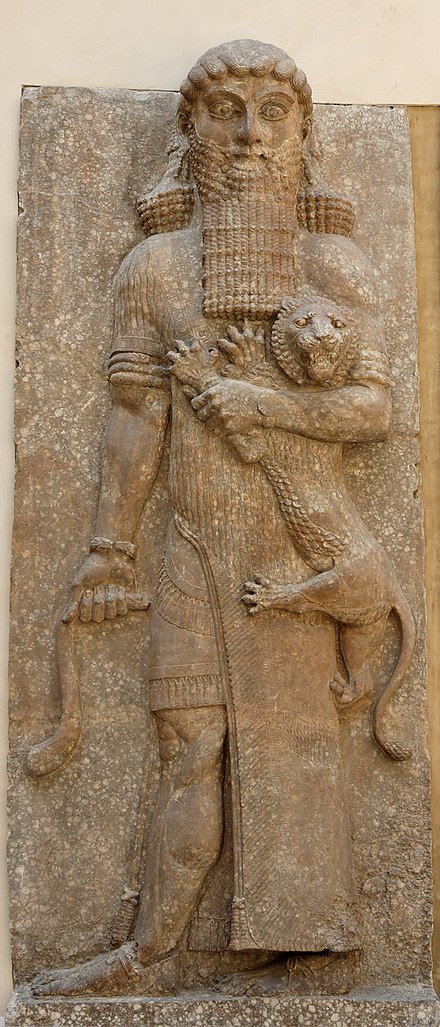
Gilgamesh
Representative/electoral democracy is failing us. You do not need to look very far or deeply to recognise the, perhaps stark, veracity of that statement. Our elected representatives have failed to adequately address climate chaos, let alone even begin to understand the wider implications of environmental collapse and Mass Extinction.

The political divide is widening and becoming more and more polarised and entrenched within confined political party affiliation and identity. This polarisation has spilled over into the public and social arena. The past three years has shown that. Although most people adopted an ambivalent1 attitude towards covid and responses to the pandemic, a large percentage of the population fell, fervently, into one of two mutually antagonistic camps.

Even though many people recognise this failure, very few seem willing to challenge the underlying assumption that representative democracy (including the electoral system) is the gold standard for government. That unhelpful decisions are being made in our parliaments can be addressed, many suggest, by changing the politicians currently in power. And the means of doing that is via the voting system.

This basic assumption, it is claimed, originated in Athens some 2,500 years ago.

This assumption is not true, at least not entirely. The Athenians did not trust voting as a fair means of selecting their decision-makers. For that they used a lottery system. Today, this is known as sortition. Sortition has been covered in this blogsite a number of times previously: see here, here, and here for example.

Pre Athens

Long before the Athenians began experimenting with sortition and democracy a number of other societies were testing out far more democratic processes than we use today. Evidence is mounting for the existence of citizen councils (where participation by lot is the basis of membership) and popular assemblies (open to any citizen to attend) as forms of decision-making many millennia ago.2  

Archaeological digs in modern day Ukraine and Moldova since the 1970s have unearthed some spectacular finds known as ‘mega-sites.’ Not only have these sites thrown into doubt theories on how cities emerged, but also our assumptions on leadership, authority, and kingship some 5,000 to 6,000 years ago.3

Many of these sites have now been explored and documented, with the largest – Taljanky – hosting more than 1,000 houses and covering an area of 300 hectares. Many of these mega-sites are constructed in concentric rings with a huge open area in the middle.

Significantly, Graeber and Wengrow note that, ‘No evidence was unearthed of centralized government or administration – or indeed, any form of ruling class.’ As to the use of the large open central area, Graeber and Wengrow can offer no definitive answer, suggesting only that its use ‘ranged from popular assemblies to ceremonies or the seasonal penning of animals – or possibly all three.’

Some 3,000 km south-east of Moldova and Ukraine is the area known as Mesopotamia (Land between two rivers) where archaeologists date cities to more than 6,000 years old. Unlike those in Ukraine and Moldova though, these cities have been known for centuries, many of them mentioned in the Bible. Many of these cities have been excavated since the 19th century and the popular myth that this was The Land of Kings has persisted even up until the present day. However, that myth shrouds the area and covers up what was a diverse arrangement of leadership and governing styles.

Research since the 1940s and more recently suggests that popular councils and citizen assemblies were common features of Mesopotamian cities with Graeber and Wengrow stating that ‘it is almost impossible to find a city anywhere in the ancient Near East that did not have some equivalent to a popular assembly – or often several assemblies (for instance, different ones representing the interests of “the young” and “the old”).

Indeed, perhaps the oldest known written story or poem – Gilgamesh – refers to an “Assembly of city elders,” and another as the “Assembly of the city’s young men.”4 In the epic poem, written somewhere between 2,200 and 2,600 years ago, the tale is told of Gilgamesh, the King of Uruk, and a dilemma he is facing over whether to submit to King Akka of Kish or not.

The poem tells us that the “Assembly of elders” recommend he submit to King Akka. The “Assembly of young men” however, recommend resistance. Eventually Gilgamesh heeds the advice of the young men and Uruk is victorious over Kish.

The crucial thing to note in these pre-Athenian examples is that citizen assemblies and popular councils were being used and tested, at least 4,000 to 6,000 years ago. Athenian democracy did not emerge until some 1,500 years later.

Democracy Covered Over

So, what happened to these more direct, highly participatory, democratic forms?

They got covered over, and buried under earth mounds of voting, electoral systems, career politicians, political parties, and special interest lobby groups.

The archaeologists are doing it. It is time we did too.

It is time for us to dig up and unearth the democratic examples of years gone by. It worked for Gilgamesh and the citizens of Uruk.

An unearthed democracy could be: direct, truly representative, fair, and open to all to participate in.

Notes:

1. I am using the word ambivalent here in its true, etymological, sense. Deriving from the Latin ambi meaning “on both sides” and Valentia meaning “strength.” This gives an idea of giving strength to both sides. Thus, instead of it having a rather insipid meaning of not caring, or indecisiveness, in this context I am suggesting an ability to hold (or at least be accepting of) both sides.

2. Just exactly where the division between citizen and non-citizen was drawn is unclear. There does seem to be some evidence suggesting that there was little, if any, distinction between men and women however, as there was in later Athens.

3. Graeber, David, & Wengrow, David, The Dawn of Everything, Penguin Books, 2022.

4. Johandi, Andreas, Public Speaking in Ancient Mesopotamia: Speeches Before Earthly and Divine Battles, University of Tartu, May 2020. In this paper Johandi also notes that the Gilgamesh poem refers to the Gods having their own Divine Assembly.

Wednesday, 17 June 2020

Can We Vote For The President Too?

This post was first published four years ago, six months before the election that saw Donald Trump become the forty-fifth president of the United States.  With the US elections coming up at the end of this year, it seems timely to re-post it.

One of the basic tenets of community development is that those affected by a decision should also be involved in making that  decision.  For many people around the world one of the decisions that most affects them is the decision as to who becomes President of the USA.  Shouldn’t we have a vote in who becomes President of the most powerful, dominant nation on Earth?

Remember Henry Kissinger?  He was the Secretary of State for Presidents Nixon and Ford.  In 1999 he spoke at Trinity College in Dublin on “Globalisation and World Order.”  In that speech he made a remarkable, candid admission that
“… globalisation is really another name for the dominant role of the US.”
Think about it.  Of the ten largest foodstuffs companies in the world, 6 of them are US companies: Coca-Cola, General Mills, Kellogg, Mars, Mendelez, and PepsiCo.  If it’s fast food we are after, then the top 10 companies are all US companies.  I probably don’t even need to name them, their logos and advertising hoardings are in just about every town and city in the world.  Headed up by McDonalds, the list includes KFC, Subway, Pizza Hut, Starbucks and Burger King.

When we go to the movies, what do we see?  The 100 top grossing films in 2015 were all made by US companies.  Musically it is not much different.  The Big Three music companies make up over 80% of the world’s market in the recording (and our listening) sector.  And those three are based – you guessed it – in the US.

Who is it that lets us know the news?  US companies.  The four largest news corporations are all US based: Comcast, Walt Disney, 21st Century Fox, and Time Warner.  And if we think we can bypass such giants of news and head for the Internet, then think of which companies largely control the content on that: Apple, Facebook, Google, Microsoft and Yahoo.

Okay, we won’t buy anything, we’ll stow our money away in banks, and not be part of the globalisation/Americanisation of the world.  Unfortunately, that won’t be easy – four of the world’s ten largest banks are US owned.

It seems we can’t escape.  If we do try then the US is not likely to leave us alone.  The US had 662 military establishments in 38 countries, in all continents except Africa, around the world in 2010.  By comparison, Russia had military bases in 10 countries, all in Eastern Europe and Asia.  The UK had bases in 18 countries and France 14.

Bases are one thing, military incursions another.  The US has by far been the nation most likely to have sent troops or other military personnel to another country, often in an aggressive manner.  To list all of these would take many lines of text.  But it doesn’t take much delving into history or our memories to name many of these.  Since the end of World War Two there has not been a year pass when the US has not deployed military operatives to someone else’s lands.  We all know of the “invasions” of Korea, Iran, Vietnam, Guatemala, Panama, Indonesia, Dominican Republic, Cambodia, Laos, Oman, Chile, Angola, El Salvador, Grenada, …. Over the past 50 years the US has been militarily involved in at least 35 nations around the globe, on all continents.  For the reader that would like to see a thorough list of these incursions (or whatever euphemism may be used) since 1890, then click here.

When there are US bombers flying overhead, naval ships in your ports, and soldiers in US uniforms in your land, it is hard to pretend that you are not affected by the decision as to who becomes President of the US.

Perhaps somewhere in the world there is a community, or maybe a few individuals untouched by US movies, fast food, the Internet.  Perhaps there is somewhere that has not been “invaded” or had a US military base established.  Even somewhere like this is not immune to the effects of US policies and practises.

No-one is immune to the effects of climate change.  Here, the US has again played the most significant part.  Carbon dioxide is a long-term gas.  Hence historic emissions are just as important, if not more so, than current emissions.  Since 1750 almost 30% of the accumulated carbon in the atmosphere has come from US sources.  Even today, China, the second highest cumulative contributor, has contributed only 9%.

Around the world we are all affected in many ways, some significantly so, by the decision as to who becomes the POTUS (President Of The United States).

So, can we vote for the President too?

A Sequel

The election of Donald Trump as President of the US would further support the tenet of this post.  Consider these examples:
  • President Trump pulled the US out of the Paris Agreement on Climate Change Mitigation.  The US is presently the second highest emitter of COin the world, behind China, yet on a per capita basis emits 2 ¼ times as much.  Furthermore, over the past 250 years the US has emitted a whopping 29% of the world's cumulative CO2 emissions.
  • President Trump is threatening to pull funding from the World Health Organisation (WHO) - a body that seeks to improve the health of people all over the world (including the US).
  • President Trump has sent a message to men everywhere to say that the abuse of women is okay - "When you're a star...you can do anything...grab them by the pussy.  You can do anything."
  • President Trump has described murder as okay - "I could stand in the middle of Fifth Avenue and shoot somebody and I wouldn't lose any votes."
Yes, indeed, can we vote for the President too?

Wednesday, 5 June 2019

Hopeless Politics

Roman forum.  Democracy is crumbling. 
Recently Australia had a general election.  The incumbent government was returned to power, much to the chagrin of those expecting and hoping for change.  Feelings and emotions ranged from sadness, through despair, to anger and all the way to hopelessness.

Therein lies much of the sterility of modern electoral politics.  Politics and politicians have become increasingly removed from the everyday activity of the common people.1  The chasm was summed up by a quip I overheard the day after the election: “That’s (voting) all over, now I don’t have to think about it for another three years.”  I wonder how many Australian electors thought the same?  Quite a number I suggest, considering that the percentage of informal votes increased from around 5% to more than 7% of the total.2

The paucity of political participation is not unique to Australia of course.  Declining voter participation is matched by an increasing distrust in politicians and the political process worldwide.  There is very good reason for that.  We have been lulled and seduced into a sense of political hope.  Those seeking change get involved in party political campaigns to get so-and-so elected and the candidate from such-and-such party unelected.

Seekers of change hope for a different outcome – an outcome thought to enable the desired change to be more likely.  That’s the problem – hope!

Hope, I have heard recently compared to a mortgage.  Hope mortgages the future.  And the root of mortgage?  The French word mort meaning death.  Hope is projected into the future, it is not grounded in the present.
“Hopeful people do not as a rule hope for what they have.  They hope for what they do not have,”
says Stephen Jenkinson.  As for hopelessness, well, that is hope’s twin, he claims.

That is what I witnessed in the course of the Australian election.  Hope for change prior to the election, and hopelessness afterwards when the hoped for change did not happen.

By putting our faith, hope, and trust in electoral politics we give away our power and our integrity.  For this reason many resort to not voting or casting informal votes.  For some this may be out of a sense of despair or surrender.  For others, not voting may be from a desire to hold onto whatever sense of authentic community participation they may have.

“But, if you don’t vote, you can’t complain,” is often levelled at those choosing not to vote.  This attempt to discredit and shame someone into their “civic responsibility” is, unfortunately, all too prevalent.  It also reflects a conservatism that inhibits creative thinking about alternatives. 

It can also be claimed that by voting you throw away your claim to participate in community and public decision-making.

When we abandon our claim to participatory decision-making then we leave a vacuum.  Politicians and other power-brokers are very happy to step into that vacuum, and in doing so, claim the right to govern and make decisions for us, and to us.

And that truly is tragic.  Discarding our community decision-making powers leads inevitably to hopelessness and the “I don’t have to think about it” approach on one hand.

On the other hand, those who do not represent us have become our rulers, our decision-makers.  Perhaps at some unconscious, unquestioning, level we instinctively know that politicians do not represent us.  They haven’t for a long time.  Moreso, politicians are becoming less representative.  Ask yourself when was the last time your local plumber or hairdresser, or other common person, was elected?  Then ask yourself: from what strata of society do most of those who claim to represent us truly represent?

We need to ask ourselves, as a society, some serious questions about the way in which our public and community decision-making is constructed.

Then, we must find ways to create something that truly is representative.

P.S. For those asking: “yes, but what’s your alternative?” I suggest you type in the word “sortition” in the “Search Rainbow Juice blog” box.

Notes:
1. I use “common” deliberately in an attempt to reclaim its honourable meaning of "to move together."
2. Voting is compulsory in Australia.
3. Stephen Jenkinson, Die Wise, North Atlantic Books, Berkeley, 2015.

Tuesday, 31 October 2017

Let's Try Something Different

How long have we been giving away our decision-making power?  How long have we thought that others have more ability to make decisions?  How long have we negated out own expertise?

In the western world we have been doing all this for centuries.  Over one thousand years ago feudalism in Europe began to impose its rule over common folk.  Feudalism morphed into the system of royalty – the supposed “divine right” of kings and queens to rule.  Under these systems, the power of common folk to make their own decisions was wrested from them, often brutally.

Around 2,500 years ago, in the bottom right hand corner of Europe, a different form of public decision-making was being tried out.  Athens and other Greek city states created the world’s first democracies – literally rule of the people.  The Roman Empire saw democracy being tested and eventually done away with.

The Middle Ages saw some small pockets of democratic experimentation.  In 1215 the Magna Carta Libertatum (Latin for Great Charter of the Liberties) paved the way for the establishment of the English parliament.  Democracy was given another go.

Following the American Revolution the United States Constitution of 1787 provided for an elected government.  Two years later, Revolutionary France adopted the Declaration of the Rights of Man and Citizens, and set up the short-lived National Convention.

Modern democracy has evolved from these various experiments into the representative democracy that many of us know today.  Representative democracy owes many of its features to Athenian democracy, although, arguably, more to the Roman Republic.

The representative democracy of today has morphed yet again into a beast that steals our decision-making power yet again.  Certainly, we get to vote in elections.  But, can we truly say that a tick or cross next to a name on a ballot paper once every three or four years is a satisfactory level of engagement in our collective decision-making?  No wonder many around the world are withdrawing from the voting process.  Even in Australia, the 2016 federal election saw fewer people cast a vote than in 1925, when it became compulsory to vote.  In the US which portrays itself as the guardian of democracy, voter turnout for the Presidential election is less than 60%.  Although the past couple of years have seen the trend bucked slightly, voter turnout in Canada, the UK, and New Zealand has been declining since the 1980s.

A measure of dissatisfaction can be found also in the Brexit vote in the UK, or the claims by Catalans for independence from Spain.

Even once we have cast our vote, do we really believe that it is our voices which get listened to in the parliaments, senates and congresses of the world?  The voices that get heard and acted on are those of the trans-national corporations and their lobbyists.  In her 2015 book1, Beasts and Gods, Roslyn Fuller showed that the more money someone spent on a political campaign the greater their chance of being elected.  In other words – money buys political power.

Yet, we persist in thinking that our vote will change things.  We persist in thinking that if we elect a new set of politicians then we will get better decisions.  It is a little like Einstein’s definition of insanity: doing the same thing over and over again and expecting different results.

So, lets stop this insanity.  Lets try something different.

Lets ignore politicians.  Lets ignore elections.  Lets ignore political parties. 

Lets try direct democracy.  If we need to find a representative group to make public decisions, then lets try selecting them by lot (see here, here, and here for some posts about this process).  Lets hold onto our personal and collective decision-making power.  Lets explore together ways to utilise and optimise our decision making power.  We certainly could not do worse than the decisions that currently come out of the parliaments, senates and congresses of the world.

Lets try.

Notes
1. Roslyn Fuller, Beasts and Gods: How democracy changed it’s meaning and lost it’s purpose, Zed Books, London, 2015

Tuesday, 4 July 2017

Devotion to Voting

Every few years we head to the local church hall or community centre.  We get handed a slip of paper and are pointed to a private cubicle in which there are pens with which we can put marks on the paper we’ve just been handed.  We dutifully place our ticks or crosses on the sheet, leave the cubicle and drop the slip of paper into a box with a slit in the top.  Our slip of paper drops into the box and mingles with hundreds of other, similar, slips of paper.  We leave the hall and go back to our homes, our jobs, our families, our lives.

We have just voted.

What have we done in those few minutes that we were inside the polling booth?  Some say we have exercised our power.  Some say we have done our civic duty.  Others claim it as our democratic right.  Still others suggest that it is a waste of time.  Have we achieved what we intend?  And, what really is our intention?

In the western world power was wrested away from the monarchs and landed gentry and placed within the hands of ordinary people in what we call democracy.  And it did what we intended it to do – at least for awhile.  But, can we truly say that democracy fulfils our intentions today?  Take a good long hard look at democracy and we may just find that we have to answer that question with a resounding NO!

No, democracy no longer fulfils the intention of equality.  No, democracy no longer fulfils the intention of fraternity.  No, democracy no longer fulfils the intention of liberty. 

When we vote we are voting not for the wellbeing of all of us, we are voting for power.  We vote for ideologies.  We are voting so that one political party can win, and the others lose.  We are voting for winners and losers.  No longer are we part of “we the people” – we are now caught in the trap of dualistic power plays: National/Labour, Republican/Democrat, Liberal/Conservative, Tories/Whigs.  If we are part of the majority then we come out as the winners.  We shout and rejoice.  If not, we are losers.  What happens to the losers in our current democratic system?  More so, what happens to the minorities who cannot even aspire to being losers?  Often they are completely excluded.

In a winners/losers game what happens to the intention of wellbeing for all?  It is sidelined, and mostly completely ignored.  The winners come to power to implement their agenda.  A big part of that agenda is to gain more power, or at least the chance of more power at the next election.  The best that can be achieved in terms of wellbeing for all under that scenario is short-term decision making.  Decisions are made with the intention of consolidating support from those who are likely to vote for the winners at the next election.  Hardly a scenario for healthy long-term planning and decision-making.

Yet, we remain devoted to voting.

Democracy is No Longer Representative

Our elected representatives have become less and less representative.  Our representatives more and more come from wealthy backgrounds, high status occupations, or from the realms celebrity-hood.  Ominously, our representatives are more and more likely to represent a newly emergent occupation – the career politician.

Yet we continue our devotion to voting.

Democracy should not be considered a static thing.  Democracy can, and should, evolve and change.  Unfortunately, it is presently moving in unhelpful and unhealthy ways.  No longer are we the people exercising our power – we are throwing it away.  No longer are we doing our civic duty - big money and big business are draining democracy of any civics that may have been there.  

What To Do

What then to do in the face of the collapse of representative democracy?  Campaigns to get people out to vote are only going to exacerbate the problem.  People are deserting the voting system in increasing numbers – certainly in the western democracies.  Many would claim this is because of widespread apathy.  Maybe it is, maybe it isn’t.  What if the decline in voter turnout is due to dissatisfaction and disgruntlement with politics, politicians and the voting system itself.  There is evidence to suggest this may be the case.

If it is the latter, then what are the next steps for the democratic journey?  This site has previously suggested sortition (the selection of decision-makers by lot) as worthy of consideration.  Previous posts can be see here, here, here, and here.


In the meantime we will need to let go of representative democracy, reject electoral politics, and give up our devotion to voting.

Tuesday, 3 May 2016

Can We Vote For The President Too?

One of the basic tenets of community development is that those affected by a decision should also be involved in making that  decision.  For many people around the world one of the decisions that most affects them is the decision as to who becomes President of the USA.  Shouldn’t we have a vote in who becomes President of the most powerful, dominant nation on Earth?

Remember Henry Kissinger?  He was the Secretary of State for Presidents Nixon and Ford.  In 1999 he spoke at Trinity College in Dublin on “Globalisation and World Order.”  In that speech he made a remarkable, candid admission that
“… globalisation is really another name for the dominant role of the US.”
Think about it.  Of the ten largest foodstuffs companies in the world, 6 of them are US companies: Coca-Cola, General Mills, Kellogg, Mars, Mendelez, and PepsiCo.  If it’s fast food we are after, then the top 10 companies are all US companies.  I probably don’t even need to name them, their logos and advertising hoardings are in just about every town and city in the world.  Headed up by McDonalds, the list includes KFC, Subway, Pizza Hut, Starbucks and Burger King.

When we go to the movies, what do we see?  The 100 top grossing films in 2015 were all made by US companies.  Musically it is not much different.  The Big Three music companies make up over 80% of the world’s market in the recording (and our listening) sector.  And those three are based – you guessed it – in the US.

Who is it that lets us know the news?  US companies.  The four largest news corporations are all US based: Comcast, Walt Disney, 21st Century Fox, and Time Warner.  And if we think we can bypass such giants of news and head for the Internet, then think of which companies largely control the content on that: Apple, Facebook, Google, Microsoft and Yahoo.

Okay, we won’t buy anything, we’ll stow our money away in banks, and not be part of the globalisation/Americanisation of the world.  Unfortunately, that won’t be easy – four of the world’s ten largest banks are US owned.

It seems we can’t escape.  If we do try then the US is not likely to leave us alone.  The US had 662 military establishments in 38 countries, in all continents except Africa, around the world in 2010.  By comparison, Russia had military bases in 10 countries, all in Eastern Europe and Asia.  The UK had bases in 18 countries and France 14.

Bases are one thing, military incursions another.  The US has by far been the nation most likely to have sent troops or other military personnel to another country, often in an aggressive manner.  To list all of these would take many lines of text.  But it doesn’t take much delving into history or our memories to name many of these.  Since the end of World War Two there has not been a year pass when the US has not deployed military operatives to someone else’s lands.  We all know of the “invasions” of Korea, Iran, Vietnam, Guatemala, Panama, Indonesia, Dominican Republic, Cambodia, Laos, Oman, Chile, Angola, El Salvador, Grenada, …. Over the past 50 years the US has been militarily involved in at least 35 nations around the globe, on all continents.  For the reader that would like to see a thorough list of these incursions (or whatever euphemism may be used) since 1890, then click here.

When there are US bombers flying overhead, naval ships in your ports, and soldiers in US uniforms in your land, it is hard to pretend that you are not affected by the decision as to who becomes President of the US.

Perhaps somewhere in the world there is a community, or maybe a few individuals untouched by US movies, fast food, the Internet.  Perhaps there is somewhere that has not been “invaded” or had a US military base established.  Even somewhere like this is not immune to the effects of US policies and practises.

No-one is immune to the effects of climate change.  Here, the US has again played the most significant part.  Carbon dioxide is a long-term gas.  Hence historic emissions are just as important, if not more so, than current emissions.  Since 1850 almost 30% of the accumulated carbon in the atmosphere has come from US sources.  Even today, China, the second highest cumulative contributor, has contributed only 9%.

Around the world we are all affected in many ways, some significantly so, by the decision as to who becomes the POTUS (President Of The United States).

So, can we vote for the President too?

Thursday, 1 August 2013

The Corruption of Democracy

The outlook for Western democracy is grim.  The latest set of figures for Transparency International show an increase in our perception of corruption in political institutions.  In the five large, Western, English-speaking nations1 the proportion of people responding that their parliament or legislature was “corrupt” or “extremely corrupt” ranged from 1 in 3 in New Zealand to almost 2 in 3 in the U.S.2

Political parties fared even worse.  46% of respondents in New Zealand felt that political parties were “corrupt” or “extremely corrupt.”  The other five nations ranged from Australia (58%), Canada (62%), the U.K. (66%) and the champion of democracy, the U.S. at (76%).  Those should be worrying statistics to any advocate of democracy.

When a political institution is seen as corrupt we perceive that those within it are acting in their own self-interest and not in the interests of the common good.  Transparency International also asked a question about self-interest.  It asked whether we felt that our governments were run by a few big entities in their own interest.  Again, the responses showed a great deal of distrust in our governments.3


Source: watchingfrogsboil (Flickr)
This finding is hardly surprising when we think of the amount of money poured into election campaigns.  In the 2010 U.K. election around $50 million was spent by the political parties; just under $2 per voter.  But even that pales against the amount spent by Mitt Romney and Barack Obama in the 2012 Presidential election – $1.1 billion, approximately $8 per voter!


Corruption in politics attacks our sense of fairness.  So, how do we re-imagine our democracies so that we perceive politics as fair?

At present our democracies involve the election of a group of citizens who are then charged with making decisions on behalf of all of us.  Inevitably, those elected “representatives” are drawn from within the ranks of political parties, although there are those who claim to be “independent.”  But, if you poke an “independent” sufficiently we will usually find an individual on a personal crusade or with an already fixed agenda.

No matter whether corruption is real or only perceived as such,4 it is clear that Western democracy is in trouble.  How can politicians and political parties be trusted when there is a perception of corruption of significant proportion?

The stock response seems often to be a variant on the theme of “vote them out” and elect some more worthy candidate.  Unfortunately, this does not change the underlying issue.  As some wag has put it: “voting only encourages them.”

Re-Imagining Democracy

So, what’s the alternative?  Throw away democracy?  Au-contraire.  We must re-imagine democracy, re-think what fairness in a democracy would be like.  For, isn’t that what we would like our public decision-making to be?  Fair, unbiased and made in the collective good.

In some, small situations, our collective decision-making could be totally participatory.  All members of the community would be entitled to speak and take part in the decision-making.

However, most of our public decision-making needs to be made on behalf of larger communities, societies, nations and inter-nationally.  In these situations we need a representative system that is fair.

Now, here’s the leap.  What could be fairer than random selection?  A flip of a coin, a roll of a dice, a card cut from a deck, a name pulled from a hat?  “Ludicrous” I can hear from some, “unworkable” from others.  Yet, it has been done.  Not only has it been done, but random selection (otherwise known as sortition) was the means used in the birthplace of democracy (ancient Athens) to select political representatives.  Unfortunately, this was conveniently forgotten by the modern constructors of democracy.

The Athenians used sortition to select all their public decision-makers, reserving voting as a means of selecting their military leaders.

Sortition is fair, transparent, cost effective and overcomes self-interest.  Let’s give it a shot.

My next posting will provide some examples of sortition, including some very recent.

1. Australia, Canada, New Zealand, United Kingdom, United States of America.
2. The percentages are: Australia (36%), Canada (47%), NZ (33%), UK (55%), US (61%)
3. Australia (53%), Canada (54%), NZ (44%), UK (59%), US (64%).
4. Just the day before posting this item the Australian media released the findings of the ICAC (Independent Commission Against Corruption) into corruption charges against two state politicians.  ICAC found both to have undertaken corrupt dealings in their roles.

Thursday, 18 October 2012

Community Development, Empowerment and Voting

Martin Pettitt.  Creative Commons
I once had a fairly senior local authority officer tell me that “empowerment is all about voting … and nothing to do with community development.”  Really?  Empowerment has everything to do with community development and precious little to do with voting.

Anyone who has been involved with and understands community development will tell you that empowerment has been one of the most enduring and potent themes in the history and practice of community development.  Indeed, aside from the phrase community development itself, empowerment has been perhaps the most often defined term in the community development lexicon.  I’m not going to add another, just quote a couple so that we know what we’re talking about.

The World Bank defines empowerment as
“… the expansion of assets and capabilities of poor people to participate in, negotiate with, influence, control, and hold accountable institutions that affect their lives.”
Notwithstanding that you may wonder that the World Bank has not lived up to its own definition or that it has not been held accountable by the majority of the World’s poor, the definition is useful.

The next definition comes from the International Association for Public Participation (IAP2).  IAP2 has championed a spectrum of public engagement that passes from the least engaged stage of Inform, through Consult, Involve, Collaborate to Empower as the highest level of engagement.  The definition of Empower that IAP2 gives is:
“To place final decision-making in the hands of the public.”
So what have empowerment and these definitions got to do with my assertion that empowerment has little to do with voting?

A further defining feature of community development has been that it’s focus has always been on community and/or collective actions and programmes as opposed to an individual or family-centred approach.

Voting could be said to more readily exist as an individual rather than a community action.  One of the great rallying calls of electoral democracy has been “one man (sic), one vote".  Certainly there have been community-based campaigns around the right to vote; the suffragette movement most notably.  Nevertheless, once the right to vote has been won, or the community has been rallied to enrol, when the voter enters the polling booth it is very much an individual act.

Regrettably, under electoral democracy, once the voter has placed their mark upon the voting paper that is generally the end of their participation in public decision-making for the next three or four years.

Furthermore, when we look at the outcome of this process who do we see?  A mostly homogeneous group of career politicians drawn largely from the upper deciles of society, highly educated and articulate, confident not only in themselves but also in their opinions and beliefs.

Look at the backgrounds of most Western parliamentarians or local body councillors.  Lawyers, teachers, business owners, wealthy farmers, financiers.  You need to search long and hard to find hairdressers, motor mechanics, truck drivers or – unspeakably – anyone who is unemployed.

No, these parliamentarians and councillors are hardly representative of the communities in which community development seeks to work.  Very few, if any, are representative of the poor people in the World Bank definition above.

Empowered by Random Choice

If empowerment entails communities taking the final decision-making then electoral politics and the voting system are not routes towards it.  Is there an alternative?  What if there were a way to more easily ensure greater representation of the demographics of communities, cities and nations?

When making a decision what could be more simple or more fair than a random throwing of a dice, a flipping of a coin, or a drawing of names out of a hat.

Wait!  Don’t dismiss the idea as absurd or fanciful.  It’s been done.  The birthplace of democracy itself – ancient Athens – used the casting of lots far more often than they did a voting system.  Ahh – but that was over 2000 years ago.  Yes, but recent experiments and research have resurrected the idea and found that it has enormous merit.

The idea even has a name, in fact, it has a couple.  Sortition is used to describe a system whereby randomness is used to select people for some position.  When applied within a political setting often the term demarchy is used.

When we think of empowerment as a community goal then demarchy has much to commend it.  Randomly selected public decision-makers suggest a far more representative possibility than does our present system.  In order to be selected by lot one needn’t be rich enough to be able to campaign, nor does one need to be famous enough to be voted for by name association.  One just needs to have a name!

A further benefit of demarchy that has been found to occur is that once someone has experienced the practice of public decision-making they tend to apply and teach the acquired skills within the community from which they have come.  There is then the possibility of overcoming another of electoral democracies pernicious weaknesses – elitism.

If, as the World Bank declares, empowerment seeks to enable people to participate and negotiate so that they are able to influence and control, then demarchy provides some answers where presently our political institutions do not.

Yes, community development has everything to do with empowerment and it can empower communities using randomness.  Let’s not toss it aside, let’s toss our names into the hat.

Wednesday, 12 September 2012

Are Leaders Redundant?

Lao Tzu.  Source: Wikipedia
Some two and a half millennia ago Lao Tzu (author of the Tao Te Ching) remarked that the sign of the best leaders was that the people would not notice their existence and that when the task was completed and the "leader" had left the people would say that “we did it ourselves”.

Since Lao Tzu’s time, however, most of our leaders have been highly visible individuals espousing ideas, values and policies that most of those being led are willing to follow with determinism and loyalty.  That description may be rather lean on what distinguishes leaders and their followers but the general idea is, I think, fairly accurate with few exceptions.

Up until the last century the individual, charismatic, eloquent leader with vision, ideas and championing definite policies was possibly in the general interest of society.  But no more.

Our growth as social beings is bringing us to a break from that style of leadership to more collective, cooperative and co-existing ways of decision-making and taking action.  The complexity of the world demands it.  No individual can hope to access enough information or process enough ideas in order to make the decisions that society needs to make.  Indeed, an individual who attempts to tell us that they can is worthy of suspicion.

Danielle Annells makes exactly this point when pondering the choices she had in the recent Australian Local Government elections. “I’ve noticed that those who advocate for uncompromising positions on certain issues are the ones I’m least likely to vote for” she writes.

Annells seeks a change in the mindset of many of today's leaders.  We certainly do.  More so, we need a change of mindset at the very core of our understanding on how society makes decisions and takes action in the future.

The characteristics of such a new mindset include:
  • acknowledging that the issues facing society are complex.
  • recognising that we are all inter-connected and that we are intimately connected with the earth and her myriad of creatures.
  • understanding that data, facts and figures are only one piece of information available to us.
  • understanding that being rational is only one mechanism available to us for decision making.  We also have visceral, sensual and other mechanisms.
  • discovering our desires for greater say in the decisions that affect us and our descendants.
  • realising that we all have access to common sense and that no one of us have ideas that are of greater value than any other.
  • knowing that our current means of selecting our decision-makers is not designed to encourage the previous six characteristics.
Such a mindset may lead us to realise that leaders are redundant.

Since the beginning of the 21st Century there have been many books published alerting us to the dangers facing us (climate change, terrorism, inequality, water and food distribution etc.) and others that espouse new ways of decision-making to help deal with these issues.

However, there have been few attempts to critique the way in which we select our decision-makers and even less that suggest mechanisms that might enable us to tap into the rich tapestry of ideas and dreams of the vast majority of humanity.

The first step, I suggest, is that we must cast aside our notion that leadership resides in charismatic or eloquent individuals and that the only way of getting the “right” leaders into decision-making positions is to vote for them.

The second and further steps?  Well, that's up to all of us collectively, cooperatively and using common sense.  (This blogsite has hinted at some of those steps in previous posts.)

Friday, 23 March 2012

A TICK IN THE BOX

Throughout the world over the past year or two there have been calls for change.  From Spain and Greece in Europe to Northern Africa and the Middle East (the Arab Spring), from India to Russia, most of them organised by groups wanting greater democracy.  Political leaders in Eastern Europe in the late 80s and early 90s heard the same cries.
Underlying these cries are the same human desires, no matter what language it is shouted in.  The desire to be heard; the desire to have a real say in the decisions that affect us; the desire to be fairly represented.
Yet, as the voices are clamouring for change we are turning out to vote in ever decreasing numbers.  Since the mid-80s voter turn-out in New Zealand elections has been steadily decreasing.  In 1984 the turn-out of voters in the national election was 89%.  Since then it has progressively declined, with less than 74% of voters turning out in the 2011 elections.  The last time it had been that low was over 100 years ago. 
In Australia, where voting is compulsory, the 2010 elections yielded a turnout of 93.2%, the lowest since the 1950s.  Voter disenchantment in Australia is further evidenced by a high percentage of invalid votes cast; 5.6% (the highest percentage since 1984).
Even that champion of democracy, the USA, has shown a steady decline from a low turnout to an extremely low turnout.  In the US Federal elections held in a non-Presidential election year the turnout has declined from 48% in 1966 to just 38% in 2010.  In Presidential election years a similar trend exists – down from 63% in 1960 (when John F Kennedy was elected) to 57% in 2008.
Many will dismiss this as voter apathy and hence the solution is more advertising, better education, greater promotion.  But what if apathy is not the problem?  What if the reasons are found in increasing distrust and disappointment in elected members and a growing desire for genuine participation in the decisions that affect us?  Politicians worldwide are distrusted.  Even in New Zealand (rated one of the least corrupt in the World) politicians came in at 39th of 40 professions in the Readers Digest survey on trustworthiness in 2008 and 2010.  They didn’t even make the list in 2011.  In the UK a recent (March 2012) Hansard Society Audit of Political Engagement found that 3 in 4 people said that they distrusted politicians.
Concurrent with this growing disenchantment with our democracy the 20th Century saw a number of crises emerge and come to a head: climate change, the glaring gap between rich and poor, warfare and terrorism, rampant consumerism, peak oil, reduced gene diversity.  Can electoral democracy cope with these complex issues in the 21st Century?
At the very time that we need greater diversity in our thinking and decision-making processes we have less and less interest in voting and less diversity of representation in our public decision-making bodies.
Can our electoral democracy cope with these 21st Century pressures?   Are our elected leaders able to provide answers to the issues that face us?  Are they able to adequately represent us?  Look at our elected members.  Can you recall your local hairdresser being elected?  What about the plumber?  But we can all be reminded of the numbers of business and union heads, lawyers and media/sports personalities who grace Capital Hill or the Beehive and local Council Chambers.  Hardly representative.  Yet, wasn’t that the promise of MMP in New Zealand.  Certainly we now have a greater range of political parties represented, but the names on the Party Lists are still selected by the Party machinery - not by Joe and Josephine Voter.
When we stop to seriously consider how much we participate in our democracy we are faced with the disturbing answer: almost none.  Is the opportunity to tick a couple of boxes ten or twenty times in our lifetime the extent of our participation?  Is that our lot?  Or can we put our name forward to be chosen by lot?
A new democratic model is being mapped out in various settings around the World.  Actually, it’s not so new; it has its roots in Athenian democracy.  Yes, the same Athenian democracy that our present representative and electoral democracy is said to be based on.  The Athenians used a variety of methods to choose their leaders and decision-makers; one of the most common was that of drawing lots, otherwise known as sortition.  Much like the selection of juries, sortition has recently (in the past 30-40 years) been experimented with, successfully, in Canada, the US, Germany, Italy and right here in Australia.  In fact, one of the seminal books on this subject was written by John Burnheim, former Professor of General Philosophy at Sydney University.  Burnheim used the term “demarchy” to describe a political system based on randomly selected groups of decision-makers. 
All systems have their inherent flaws and it would be dishonest to present demarchy as the saviour of humanity or even as a political utopia.  However, it does have several enticing elements that make it worth considering as the next step in our democratic journey.  The first, and perhaps most obvious, is that it has the potential to ensure that decision-makers are much more representative than at present.  Selected decision-makers are also less likely to be subject to political pressure or expediency as no-one is able to predict who will be selected.  It makes it possible for someone to become a decision-maker without having to be rich or famous enough to afford or gain the self-promotion.  A further great benefit is that civic skills and knowledge become learnt by more and more people within a wider number of communities than is presently the case. 
Sortition brings with it a greater diversity of backgrounds, thinking, experience and skills.  It brings with it the “common sense” of all of us, rather than the (largely illusory) expertise of bureaucratic and political elites.  As Einstein remarked “the significant problems we have cannot be solved at the same level of thinking with which we created them.  The problems facing us today have mostly been created during a time of increasing concentration of the mechanisms of public decision-making in bureaucracies and political elites.
Can it work?  Experience around the world suggests that it can.  One of the best examples is that of the Peoples Verdict, sponsored by Macleans (the national weekly current affairs magazine in Canada) in 1991.  Macleans brought together 12 randomly selected Canadians for three days of dialogue and decision-making.  Knowing nothing of each other and coming from a diverse background with differing views they were given the task of coming up with a vision for the future of Canada.  Macleans was so impressed with the exercise that it devoted its entire 1 July 1991 edition to an explanation of the process, the participants and the outcome.  The final document covered a raft of issues from education to the economy, from individual rights to government and the Constitution.  Notwithstanding their prior differences and backgrounds all 12 participants enthusiastically signed the document.
At a time when we are facing complex and diverse issues as well as a demand for better representation, demarchy is deserving of attention.  Certainly our present form of representative democracy is an improvement on the feudal, aristocratic and monarchic systems of previous centuries.  It is also preferable to many of the tyrannies and oligarchic systems that exist in the world.  However, it can and should be improved.  Demarchy offers a greater opportunity for citizens to participate in the decisions that affect them.  Indeed, there are suggestions that better decisions may be made.
© Bruce Meder 2012